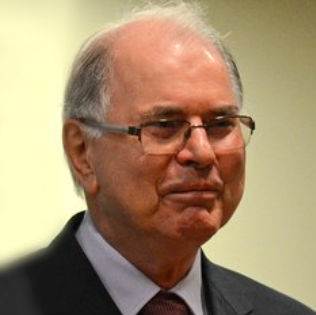
Juergen Rochol
Former Professor
In memoriam
Bio
Born on February 4, 1938, in Berlin, Germany, Professor Juergen Rochol completed his primary education in Germany during the Second World War. In 1943, he and his family moved to Brazil on a long sea voyage, escaping the war environment; his father came seeking work and a new life in Brazil. The family settled in the Floresta neighborhood, and Professor Juergen Rochol began attending Brazilian schools, having to learn the Portuguese language.
In 1960, he took the entrance exam for the Electrical Engineering course at UFRGS (Federal University of Rio Grande do Sul), where he studied for two years. During these two years, he also pursued studies in Electrical Engineering in Karlsruhe, Germany. In 1962, due to his strong scientific interest, he decided to pursue a Bachelor’s degree in Physics at UFRGS, which he completed in 1965. While still an undergraduate student, he began his research activities as a scholarship holder at the Physics Institute of UFRGS, which at that time was emerging as a pioneering unit for academic research at the University.
In 1966, he was admitted as a Professor at the Physics Institute of UFRGS, where his contemporaries included former Rector Gerhard Jacob, and Professors Philippe Olivier Alexandre Navaux, Celso Sander Müller, and José Lorenzo Medero. He demonstrated great ability in the area of instrumental physics and, from an early age, showed immense technical capacity in the then-nascent academic activity of Computer Science at UFRGS, at the Physics Institute as a professor and researcher until 1975.
In 1969, he began his Master’s degree at the Physics Institute, completing his dissertation and research in the area of Applied Physics, supervised by Prof. John David Rogers. After completing his master’s degree in 1972, he became one of the supervising professors of the newly created Postgraduate Course in Computer Science at UFRGS (CPGCC) in 1973. This course included professors from the electronics and instrumentation area of the Physics Institute and professors from the Academic Division of the Data Processing Center who worked in computer programming.
Professor Juergen Rochol is among the pioneers of the Postgraduate Course in Computer Science at UFRGS, the first course in the field in the state of Rio Grande do Sul, and one of the first courses in the field in the country. The CPGCC (today the Postgraduate Program in Computer Science) also included other pioneers such as Celso Sander Müller, Daltro José Nunes, José Lorenzo Medero, José Mauro Volkmer de Castilho, Clésio Saraiva dos Santos, Marcus G. Zwanziger, Paulo Alberto de Azeredo, Philippe Olivier Alexandre Navaux, Sérgio M. Bordini, among other prominent academics.
In the 1970s, Professor Juergen Rochol stood out for his pioneering work in Rio Grande do Sul and Brazil in technological innovation. During this period, he designed and built the first Brazilian MODEM – an indispensable piece of equipment for data communication – which was marketed by PARKS Eletrônica. For this, he worked directly with Paulo Renato Ketzer de Souza, an engineer graduated from UFRGS, who was then a partner-director and founder of the company.
For this achievement, Professor Juergen is known as one of the pioneers of data communication in Brazil. The prototype of a 1200 bps modem, developed by Professor and researcher Juergen Rochol, was the starting point for PARKS in the field of data communication. Believing in the project, the company began work to transform the model into an industrialized product. The goal was commercialization in the national market.
Although it underwent changes from the original design until reaching the final version, this modem marked the company’s entry into the data transport market in Brazil. The development of this equipment also led to the first royalty transfer agreement between UFRGS (Federal University of Rio Grande do Sul) and a company from Rio Grande do Sul, back in the 1970s. In the opinion of experts, the development of this product also constitutes the initial milestone of the data communication industry in Rio Grande do Sul, as it was a product designed in the UFRGS laboratories, with 100% Rio Grande do Sul technology and great success in the national market.
From 1978, he worked as a Development Engineer at Digitel, alongside his partners and former students from the PPGC program: Jaime Barreiro Wagner, Gilberto Soares Machado, and Francisco A. Wendt (whose master’s research led to the conception of another MODEM, also produced by the Brazilian industry). When he left the company in 1981, Digitel was already established as a market leader in the Data Communication segment in Brazil, a sector in which it remains a benchmark to this day.
From 1981, he founded STI Informática Ltda., where he initially developed electronic instruments for navigation on vessels, aiming to provide this equipment for his hobby as a sailor and navigator. He also immediately began developing various projects in the area of Data Communication and engineering design projects. He worked at STI until mid-1991.
In 1982, in addition to his outstanding and pioneering work in the area of technology transfer and innovation at UFRGS, he also dedicated himself to consolidating his academic research area. He organized the 1st Brazilian Symposium on Computer Networks (SBRC), a scientific event that influenced an entire generation of professionals and remains to this day one of the largest events in the field of Computing in Brazil, bringing together more than a thousand participants in its last editions.
As a result and legacy of his extensive knowledge in the area of data communication and computer networks, he published two books in the area of Data Communication, within the series of textbooks of the Institute of Informatics: “Data Communication” and “Computer Networks”, the latter in partnership with Professors Alexandre Carissimi and Lisandro Zambenedetti Granville. In addition to books, he has dozens of scientific articles published in conferences and journals, as well as chapters in three books as a guest contributor.
However, it is worth highlighting that his greatest contribution is perhaps his immense ability to transform research results into innovative technological products. Professor Juergen, throughout his professional career, has developed approximately two dozen technological products in his field.
Since 1992, he has worked as a full-time researcher in the Computer Networks Group in the areas of data communication, digital networks, wireless and optical networks, at the Institute of Informatics of UFRGS.
In undergraduate teaching, he has always been intensely involved in his field and has always been an encourager of teaching activities, especially at the undergraduate level, both in Computer Science and Computer Engineering. In addition to supervising numerous undergraduate theses, he has actively participated in countless dissertation defense committees. In addition to his 20 years of teaching experience, where he directly or indirectly trained leading professionals, he supervised numerous master’s dissertations and doctoral theses. He also supervised professors who made significant contributions to UFRGS, including Cláudio Walter (Full Professor in the Department of Electrical Engineering) and Taisy Silva Weber (Professor at the Institute of Informatics), as well as professors working in various national and international institutions. In 2001, he completed his doctorate through direct thesis defense, a modality that can only be granted at UFRGS “exceptionally, to highly qualified candidates, provided that the proposal is submitted by the Program’s Postgraduate Council to the Postgraduate Chamber,” according to a normative decision of the Postgraduate Chamber of the Teaching, Research and Extension Council.
Since 2003, after his retirement, he became a visiting collaborating professor at the Institute of Informatics, actively and regularly participating in the Institute’s activities, in addition to serving on master’s and doctoral thesis committees at other institutions. Although retired, he continued to work full-time, with great enthusiasm and active involvement in research projects and supervision.
Many of his advisees and undergraduate and graduate students have distinguished themselves as professors at universities in Brazil and around the world, while others hold technical and corporate positions in data network and communication companies such as DATACOM, PARKS, Digitel, ALTUS, among others.
His non-academic activities included dedication to naval sports, more precisely to sailing and similar activities, an experience that earned him national and international certification as a Captain of vessels with the Brazilian Navy. A volunteer in his community, he actively participated in pastoral activities in his parish, where his religiosity is rooted in the Catholic faith.
Professor Juergen Rochol’s pioneering spirit and academic leadership are expressed in his multiple academic activities in teaching, research, and outreach, as well as his outstanding performance in technological innovation, both at UFRGS and in the national scientific community of Computer Science.
His immense capacity for bringing people together, remarkable intelligence, ability to work in groups, differentiated teaching methods, capacity to motivate students, colleagues, and technical-administrative staff, and his national leadership in research, at a time when Data Communication in Brazil was taking its first steps, are attributes of a professor and researcher of remarkable character, ethics, and ability, who always placed the Federal University of Rio Grande do Sul and the Institute of Informatics ahead of his personal objectives, desires, and wishes.