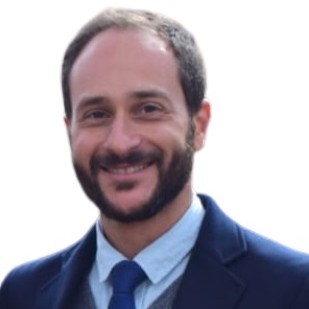
Edison Pignaton de Freitas
Professor
Bio
He holds a degree in Systems and Computer Engineering from the Military Institute of Engineering (2003), a degree in Legal and Social Sciences from the Federal University of Rio Grande do Sul (2006), a master’s degree in Computer Science from the Federal University of Rio Grande do Sul (2007), and a doctorate in Computer Science obtained through a joint supervision program between the Federal University of Rio Grande do Sul and the University of Halmstad in Sweden (2011), having completed a Post-doctoral internship in the Control, Automation and Robotics Group of the Postgraduate Program in Electrical Engineering at UFRGS (2013). As a military engineering officer in the Brazilian Army, he worked at the 1st Area Telematics Center in Porto Alegre on various projects involving the adoption of free software by the Brazilian Army and the planning and administration of physical data networks for military maneuvers, and also in the network incident handling group responsible for the security of the computer network of the Southern Military Command (2004 - 2008). At the Army Technological Center, he worked on the MSS 1.2 Anti-tank Missile, Unmanned Aerial Vehicle, Astros 2020, and Low and Medium Altitude Anti-Aircraft Defense System projects (2012-2013). He completed an internship at Airbus Central Entity in Toulouse, France, where he worked on requirements processing and specification of computer systems in the A380 project (2002). He served as an adjunct professor in the Department of Applied Computing (DCOM) at the Federal University of Santa Maria (2013-2014). Currently, he is an adjunct professor at the Institute of Informatics of the Federal University of Rio Grande do Sul, and also an associate researcher at the School of Engineering of UFRGS. He has experience in the field of Computer Engineering, with an emphasis on Automation, Analysis, Specification and Design of Computer Systems, mainly working on the following topics: computer networks, cloud computing, cybersecurity, distributed embedded real-time systems, automation, aerospace computing systems and wireless sensor networks. Named on Stanford University’s list of the top 2 percent of scientists in the world in 2023, 2024 and 2025.